
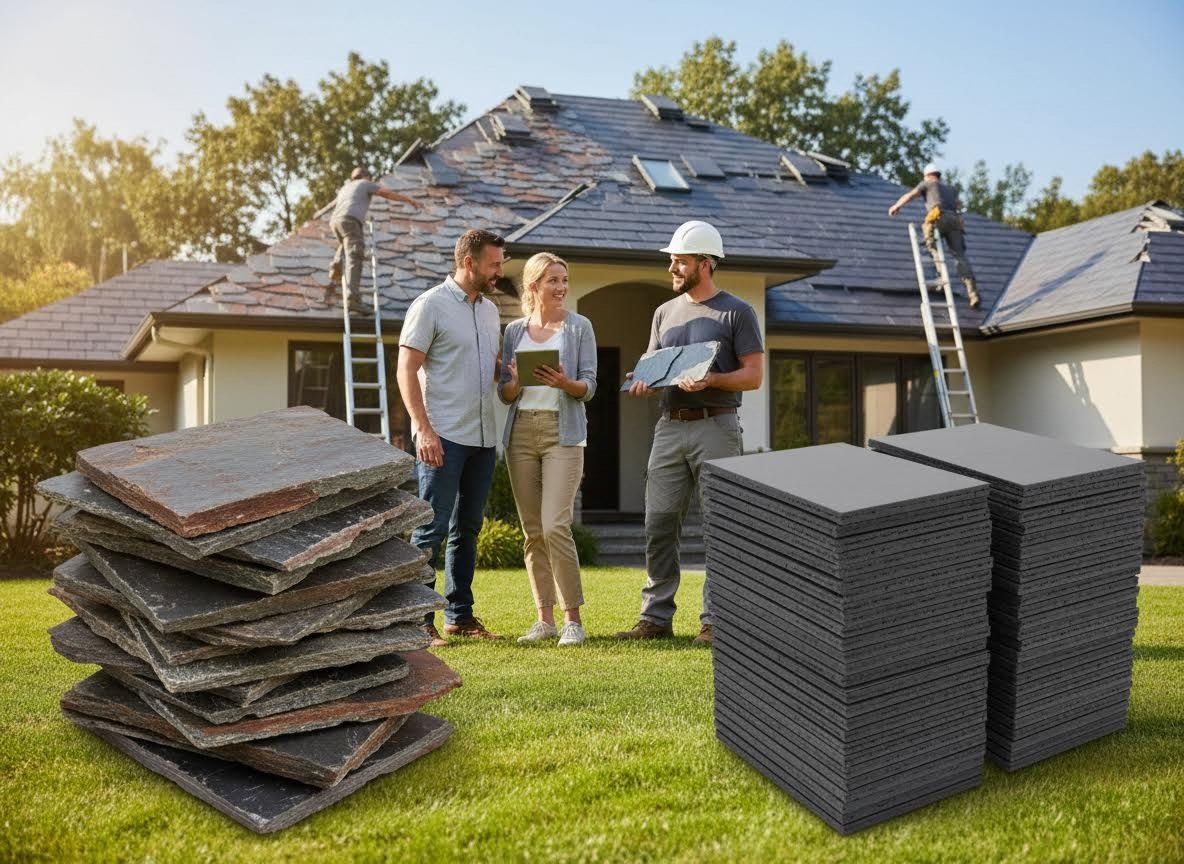
Choosing the right roofing material is a significant decision for any property owner, impacting everything from curb appeal to long-term protection and value. When considering premium options that offer both beauty and durability, slate often comes to mind, but the choice between natural and synthetic slate can be complex. Frye Roofing understands these nuances, having guided countless clients through similar decisions, and we're here to help clarify the differences between these two distinguished materials.
The Enduring Elegance of Natural Slate
Natural slate has been a hallmark of sophisticated residential roofing and commercial roofing for centuries, prized for its unparalleled beauty and longevity. Formed over millions of years, each piece of natural slate possesses unique variations in color and texture, creating a distinctive, rich aesthetic that cannot be perfectly replicated. Beyond its visual appeal, natural slate is exceptionally durable, resistant to fire, rot, and insects, and can last well over a century with proper care. Its substantial weight requires a robust roof structure and specialized expertise for roof installations, making it a significant investment that truly stands the test of time.
The Modern Solution: Synthetic Slate
Synthetic slate offers a compelling alternative, designed to emulate the look of natural slate while providing a range of practical benefits. Typically manufactured from engineered polymers, rubber, or other recycled materials, synthetic slate is significantly lighter than its natural counterpart. This reduced weight often eliminates the need for additional structural reinforcement, simplifying roof installations and broadening its applicability to more homes and buildings. Modern synthetic options boast impressive durability, often coming with extended warranties and offering superior impact resistance against hail and harsh weather, making them a wise choice for diverse environments.
Key Considerations for Your Roofing Project
When deciding between natural and synthetic slate, several factors come into play. The aesthetic preference is paramount; while synthetic slate closely mimics the look, natural slate's subtle imperfections are part of its charm. From a cost perspective, natural slate generally involves a higher upfront investment due to material costs and the specialized skills required for its roof installations and subsequent roof repairs. Synthetic slate typically offers a more budget-friendly entry point, along with potentially lower long-term maintenance costs. For homeowners and business owners alike, the overall weight of the material and the structural integrity of the building are also crucial considerations, as a natural slate roof demands a strong foundation.
Durability and Maintenance: A Long-Term View
Both natural and synthetic slate are renowned for their exceptional durability, but their maintenance needs differ. Natural slate is incredibly resilient but can be brittle and susceptible to breakage from impacts or foot traffic if not handled by an experienced roofing contractor in Virginia and West Virginia. Repairs often require matching the unique color and texture of the existing slate. Synthetic slate, on the other hand, is engineered for consistency and often features enhanced flexibility and impact resistance, making it less prone to breakage. Its uniform nature can also simplify future roof repairs, potentially reducing associated labor and material costs over its long lifespan.
Ultimately, the choice between synthetic and natural slate roofing depends on your specific priorities, budget, and the architectural style of your property. To explore which option best suits your needs, we invite you to consult with our experienced team for a detailed assessment and personalized recommendation.